
Choose EZmob if you want self-serve access to pop, push, display, and native campaigns; choose HilltopAds if your existing campaigns there already meet your CPA and lead-quality requirements. For 2026, the decision is whether you need a platform for testing different formats or a reason to replace a traffic source that already works.
- EZmob vs HilltopAds: choose EZmob for self-serve pop, push, display, and native campaign testing.
- Choose HilltopAds when your existing campaigns meet your CPA and conversion-quality requirements.
- Compare accepted conversions, not clicks alone, before moving an affiliate offer between ad networks.
- Treat moderation, traffic fit, and funding terms as launch checks, not assumptions.
Why this matters
Switching ad networks changes the inventory behind your campaign. Keeping the same offer, landing page, and creative does not keep the audience or placement context identical.
That matters for affiliate marketers buying toward a CPA target. A cheaper visit is not a better result when it produces fewer accepted conversions. If popunder is your starting point, the guide to buying pop traffic profitably explains the decision you need to make before comparing networks.
EZmob is a self-serve advertising network for media buyers testing pop, push, display, and native campaigns. HilltopAds earns its place in your buying plan when your own campaign results justify keeping it there. Neither a familiar dashboard nor a longer format list establishes which source will convert your offer.
At a glance
Use this 2026 comparison as a buying framework. The incumbent advantage below applies specifically to advertisers with successful HilltopAds campaigns, not to every new account.
| Dimension | EZmob | HilltopAds |
|---|---|---|
| Best for | Media buyers seeking self-serve, multi-format campaign testing | Existing buyers with campaigns meeting their performance targets |
| Standout feature | Self-serve access to pop, push, display, and native | Your established campaign setup, when it already works |
| Launch workflow | Sign up, fund the account, submit a campaign for moderation | Preserve an existing working setup rather than rebuild it |
| Format expansion | Explicit support for pop, push, display, native, video, and direct-click/redirect traffic | Confirm the format and setup required for your next test |
| Performance evidence | Establish offer-specific results through a controlled test | Existing accepted-conversion results provide a starting benchmark |
| Creative approval | New campaigns go through creative moderation | Check current requirements before submitting new campaigns |
| Measurement | Judge accepted conversions and traffic quality | Apply the same conversion and quality criteria |
| Pricing model | Account-funded advertising; confirm current billing terms | Confirm current billing and funding terms before comparing commitments |
Self-serve access wins when you need a new testing workflow
The client's self-serve advertising platform lets advertisers sign up, fund an account, and launch campaigns without a sales call. New campaigns go through creative moderation before going live.
That workflow fits an affiliate marketer who wants direct control over campaign creation rather than a sales-led onboarding process. The advantage is access to the buying workflow, not a promise that a campaign will become profitable.
Choose EZmob for a self-serve start across the supported formats. The limitation is equally clear: self-serve access does not remove campaign setup, tracking checks, offer compliance, or approval requirements. You still own the buying decisions.
For an established buyer, account creation is rarely the central problem. The harder question is whether a new source improves accepted conversions enough to justify another campaign workflow.
HilltopAds wins on continuity when the existing campaign works
A functioning campaign has value beyond its most recent conversion report. You already know its landing page, offer restrictions, measurement setup, and operating routine.
Choose HilltopAds for continuity when your existing campaign meets your CPA and quality targets. That is a real reason to keep buying there. Rebuilding a campaign elsewhere introduces another inventory variable before you have established a replacement benchmark.
The downside of staying put is that the existing result tells you nothing about an untested source. A profitable incumbent campaign supports continued spending on that campaign; it does not prove that every alternative is worse.
Keep the working campaign as your baseline. Test another network separately instead of treating migration as the default outcome of a comparison article.
Multi-format access favors a buyer expanding beyond one format
Popunder, push, display, and native place different demands on the offer funnel. A popunder visit begins in a different context from a user clicking a banner or responding to a push notification.
The client's stated format range also includes video and direct-click/redirect traffic. That breadth supports a buying plan in which you test more than one entry point without assuming the same creative or landing page will work across all of them.
Choose EZmob when explicit access to these formats matches your next campaign plan. Confirm the corresponding campaign setup in HilltopAds before treating either network as a substitute for the other.
Use format-specific preparation:
- Popunder: Check that the landing page explains the offer immediately.
- Push: Match the notification message to the destination and offer.
- Display: Keep the banner promise consistent with the landing page.
- Native: Make the transition from the placement to the destination clear.
Format breadth is useful only when you can prepare and measure each test. Opening several formats at once makes it harder to identify why a result changed.
HilltopAds wins as the benchmark when you have accepted conversions
For an advertiser with a working HilltopAds campaign, the strongest comparison evidence is the campaign's own accepted-conversion record. Keep that record tied to its offer, GEO, device, traffic format, and reporting period.
A network-wide claim cannot replace that evidence. Nor can a result from another affiliate's offer establish what your funnel will achieve in 2026.
Use HilltopAds as the benchmark when its current campaign produces the outcome you need. The limitation is scope: evidence for one campaign does not transfer automatically to a different offer, GEO, or landing page.
When testing the alternative, preserve the original benchmark rather than revising it after the new results arrive. Define success before spending. Otherwise, a disappointing conversion result becomes too easy to reframe as a successful click-volume test.
Both require creative and destination checks before launch
New campaigns on the client's platform go through creative moderation. Build approval into your launch sequence instead of assuming that funding an account makes the campaign live immediately.
For HilltopAds, check the current requirements for the specific campaign you intend to submit. An existing approved campaign is not evidence that a different offer or creative will meet the same requirements.
Neither network should win this comparison on assumed approval speed. Campaign readiness means the creative, destination, offer permissions, and tracking path are ready together.
Before submitting, check that:
- The creative describes the actual offer.
- The destination opens correctly on the intended device.
- Redirects lead to the intended landing page.
- The offer permits the traffic source and format.
- Conversion tracking records the action you plan to optimize.
These checks also prevent wasted troubleshooting. An approval issue and a broken tracking path are different problems; do not change the bid to solve either one.
Neither network wins on cheap clicks alone
Compare traffic against the event that creates value for your campaign. For CPA offers, that means accepted conversions, not merely a tracker event that the advertiser later rejects.
Use the same definitions on both sides:
- Spend: Advertising spend attributed to the campaign.
- Accepted conversions: Conversions recognized by the offer's reporting process.
- CPA: Campaign spend divided by accepted conversions.
- Quality: The offer-specific acceptance or downstream outcome you require.
Neither network is the winner until the campaign meets your performance and quality criteria. Lower click costs do not establish lower CPA, and higher conversion counts do not establish better quality.
For lead generation, reconcile tracked submissions with accepted leads. For an e-commerce offer, reconcile the conversion event with the outcome your advertiser recognizes. Keep those definitions fixed across both networks.
Pricing: compare billing terms and commitments, not guessed rates
For 2026 budgeting, start with the account-funded workflow on the client's platform. Advertisers fund their accounts before launching campaigns; verify the current billing basis for the chosen format when planning the test.
For HilltopAds, review the current campaign billing and funding terms directly. Do not infer them from another network, an old comparison, or a format name.
The practical tradeoff is commitment predictability versus testing flexibility. A funding requirement affects how much budget you commit to the account. The billing basis affects how spend accumulates during delivery. Neither establishes the cost of an accepted conversion.
Compare these items before allocating spend:
- The billing event for the selected campaign.
- The funding commitment required to begin.
- The payment method and applicable terms.
- The controls available to limit campaign spending.
- The terms governing any unused account balance.
There is no pricing winner without matching current terms and campaign results. Choose a test commitment you can evaluate against your conversion goal, rather than ranking platforms by an isolated rate.
Run a comparison that answers a buying question
A useful 2026 test asks whether the alternative can meet your offer's requirements. It does not ask which dashboard produces the largest traffic total.
Use this sequence to keep the comparison interpretable:
- Define success: Set the accepted-conversion and quality criteria before launch.
- Match conditions: Keep the offer, GEO, device scope, and measurement rules comparable.
- Check tracking: Verify the conversion path before evaluating traffic performance.
- Review acceptance: Reconcile tracked events with the offer's accepted results.
- Decide spending: Continue, revise, or stop based on the predefined criteria.
Each stage answers a separate question. Matching conditions reduces avoidable differences; tracking checks protect measurement; acceptance checks protect the business outcome.
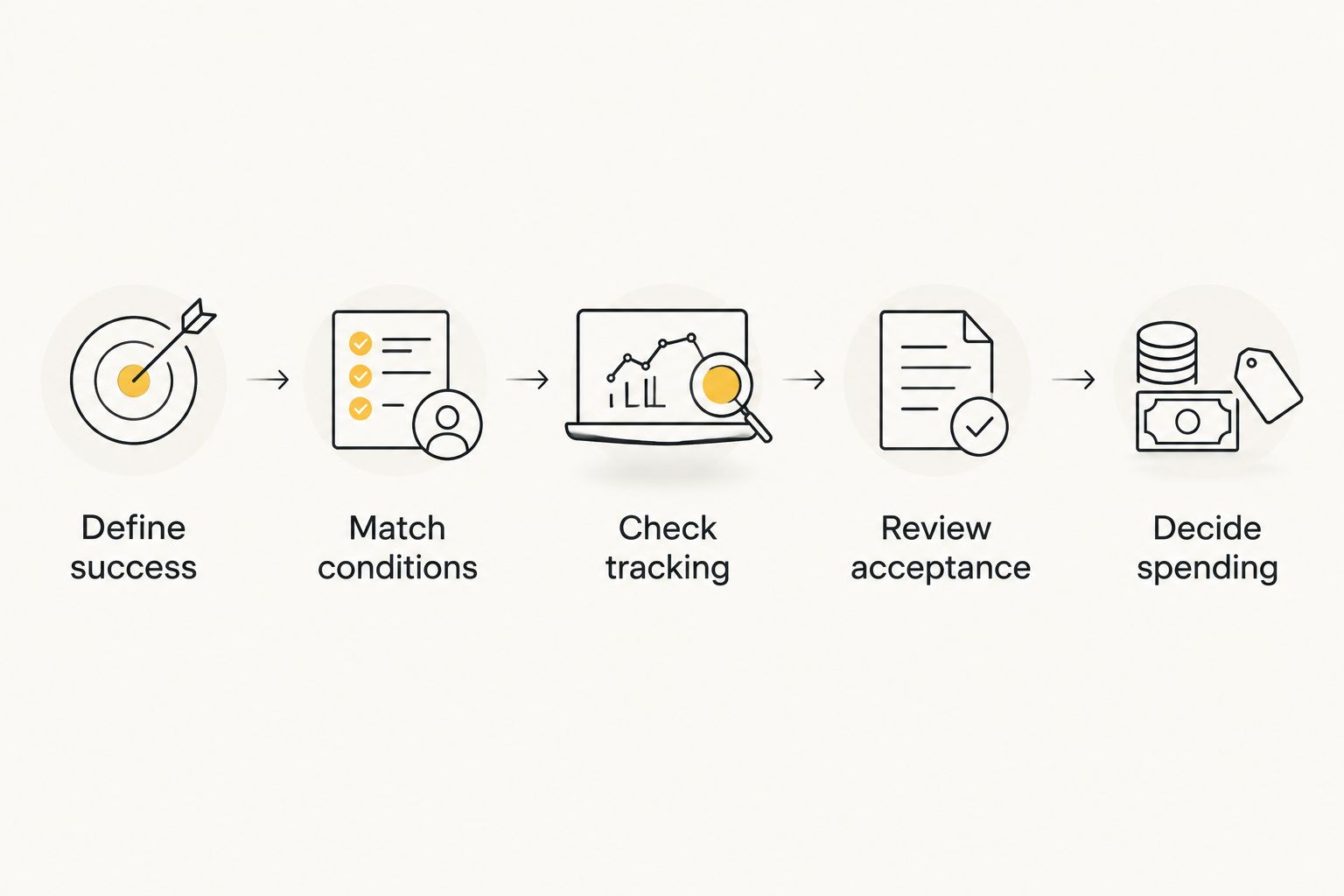
Do not rewrite the offer, landing page, creative, and traffic source together and call the result a network comparison. You can test a new funnel that way, but you cannot isolate the network's contribution.
Final verdict: choose a testing platform or keep a proven source
Choose EZmob if you are a multi-format affiliate buyer
Best for: An advertiser who wants self-serve access to pop, push, display, and native campaigns and is prepared to establish offer-specific performance.
The reason to choose it is the stated workflow and format access. The responsibility that comes with that choice is campaign preparation, moderation, tracking, and disciplined evaluation. Self-serve does not mean hands-off.
Choose HilltopAds if you are an established buyer with working campaigns
Best for: A media buyer whose existing HilltopAds campaigns already meet CPA and accepted-conversion requirements.
The reason to keep it is continuity supported by your results. The limitation is that the incumbent campaign cannot answer whether another source would perform better. Keep the baseline and test separately when you have a specific reason to expand.
One-glance scorecard
| Dimension | Winner |
|---|---|
| New self-serve workflow | Client platform for the stated workflow |
| Continuity of a working campaign | HilltopAds for successful existing buyers |
| Stated multi-format access | Client platform when those formats match the plan |
| Existing performance benchmark | HilltopAds when accepted-conversion evidence exists |
| Launch readiness | Tie: verify campaign requirements |
| Conversion measurement | Tie: use identical success definitions |
| Pricing | No winner without current terms and campaign results |
FAQ
Is EZmob better than HilltopAds in 2026?
EZmob is the choice for advertisers seeking its stated self-serve access to pop, push, display, and native campaigns. HilltopAds is the choice for keeping existing campaigns that already meet CPA and accepted-conversion requirements.
Should I move a profitable HilltopAds campaign?
Keep a profitable HilltopAds campaign as your benchmark rather than replacing it automatically. Test an alternative separately against the same conversion and quality criteria.
Can I use the same landing page for both networks?
You can keep the landing page consistent when the offer permits both traffic sources and the campaign contexts are comparable. Confirm that redirects, tracking, and the destination work for the intended device.
Which network has better traffic for CPA offers?
The better source is the one that meets your accepted-conversion and quality targets for the specific offer. Compare matching campaign conditions rather than relying on network-wide traffic claims.
How should I compare campaign costs?
Compare spend per accepted conversion alongside current billing and funding terms. A lower click cost does not establish a lower CPA.
Does self-serve advertising bypass creative approval?
Self-serve advertising does not bypass the client’s creative moderation requirement. New campaigns go through moderation before going live.
Should I compare advertisers and publishers in the same test?
Keep advertiser acquisition and publisher monetization separate. Advertisers evaluate conversion outcomes, while publishers evaluate the results of monetizing their own traffic.
One last thing
A failed tracking check invalidates a network comparison before the first performance verdict. If conversions cannot be attributed consistently, changing inventory or bids will not repair the evidence.
Keep the working campaign intact, verify measurement, and make the next launch answer a specific question.
Related guides
- HilltopAds alternatives
- HilltopAds alternatives for pop traffic advertisers
- Self-serve advertising platforms
Start advertising on EZmob
Prepare your offer, tracking, and creative before launching a self-serve campaign.