
Best overall: EZmob for self-serve pop, push, native and display campaigns. Best specialist options: ExoClick for adult-focused display and native inventory, TrafficJunky for tube-site placements, PropellerAds for push scale, Adsterra for pop traffic and RichAds for structured push testing in 2026.
- EZmob is the 2026 default among ad networks for dating offers when buyers need four self-serve formats.
- ExoClick fits adult-focused display and native campaigns; TrafficJunky fits tube-site placements.
- PropellerAds fits push scale, while RichAds fits structured push testing across GEOs.
- Adsterra is the pop-focused alternative; bids, inventory and creative eligibility require campaign-level checks.
Why this matters
Dating offers create campaign problems that do not show up in standard e-commerce traffic. Creative eligibility can change by publisher, landing pages can cross into adult content, and a format that works in one GEO can fail in another.
That makes network selection part of campaign setup, not an administrative choice. A media buyer needs eligible inventory, useful targeting controls and enough format coverage to test the offer rather than blame one traffic source.
The best ad networks for dating offers in 2026 also make placement data available for optimization. Domain, zone, site or publisher controls matter because network-level results can hide a small group of profitable placements behind a larger pool of weak traffic.
The 2026 verdict
EZmob is the best overall choice for media buyers who want to test dating offers across pop, push, native and display without moving between platforms. ExoClick is the specialist choice for adult-focused native and display inventory. TrafficJunky earns a separate slot for campaigns designed around adult tube-site traffic.
PropellerAds is the push-scale pick, while RichAds is better suited to controlled push tests. Adsterra belongs on the shortlist when pop traffic is the primary acquisition method. There is no permanent budget winner because auction bids, GEO availability and publisher inventory change at campaign level.
What makes the best ad network for dating offers
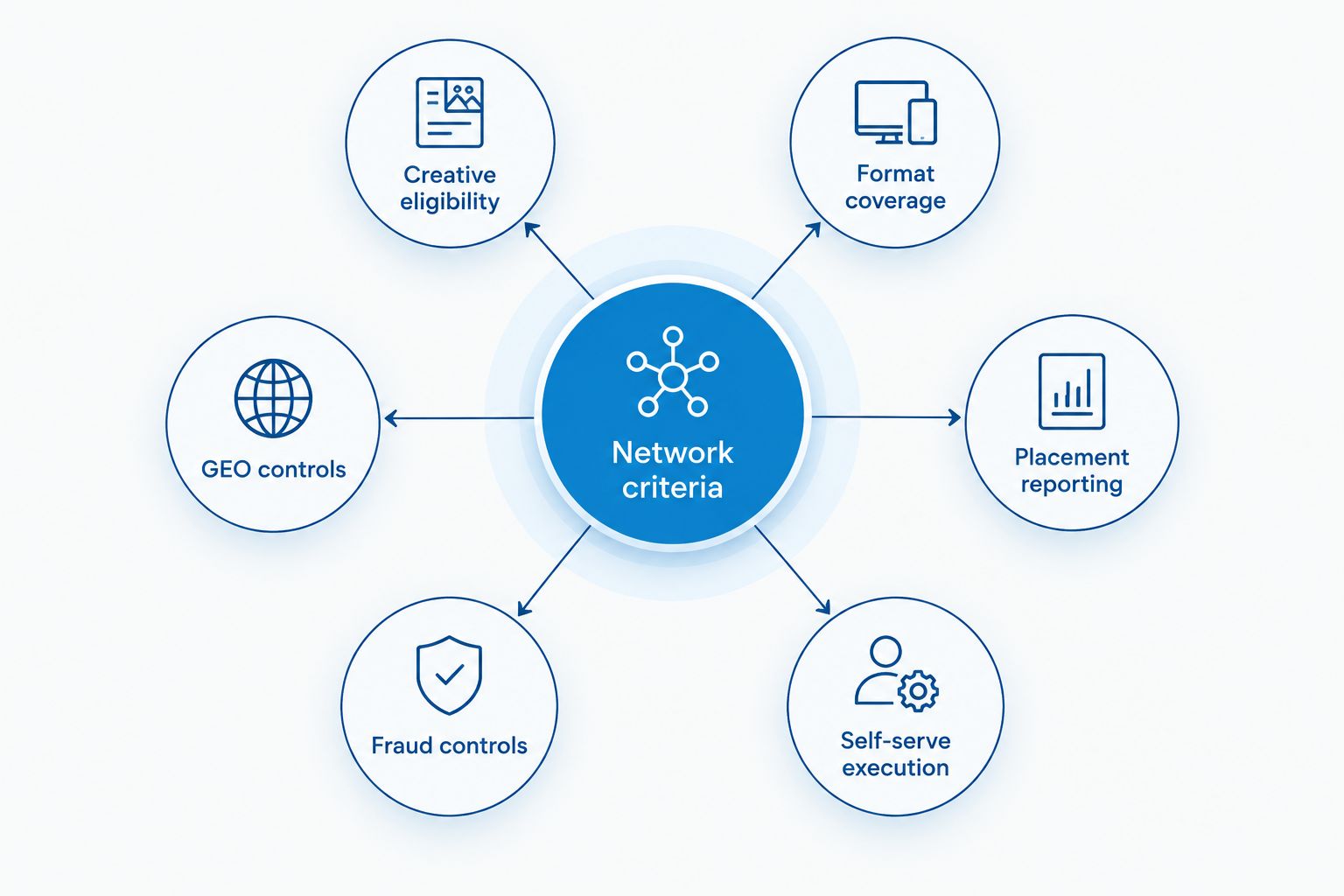
Use these criteria before opening a campaign:
- Creative eligibility: Confirm that the network and selected publishers accept the dating angle, images and landing page.
- Format coverage: Pop, push, display and native use different creative mechanics and user entry points.
- GEO controls: Country-level targeting is not enough when carrier, device, browser or regional performance drives CPA.
- Placement reporting: Zone, site or publisher data lets you cut weak inventory without stopping the full campaign.
- Fraud controls: Filtering and postback data help separate invalid activity from traffic that simply does not convert.
- Self-serve execution: Direct access to bids, targeting and exclusions shortens the loop between tracker data and campaign changes.
Score networks against the funnel you actually run. A platform with broad inventory is not automatically the right choice when the offer only converts through push, while a specialist adult network adds little when the landing page requires mainstream placements.
Ad networks for dating offers at a glance
| Network | Best for | Standout feature | Key limitation |
|---|---|---|---|
| EZmob | Multi-format self-serve testing | Pop, push, native and display access | Advertisers remain responsible for campaign setup and optimization |
| ExoClick | Adult-focused display and native | Inventory aligned with adult audiences | Less suitable when the offer requires mainstream-only placements |
| TrafficJunky | Adult tube-site campaigns | Direct access to concentrated adult audiences | Narrower use case than a multi-format network |
| PropellerAds | Push campaign scale | Push and in-page push options | Short creative units limit how much context an ad can carry |
| Adsterra | Pop-led acquisition | Popunder inventory alongside other formats | Broad inventory requires placement-level monitoring |
| RichAds | Structured push testing | Push-focused targeting and optimization tools | Format focus is narrower than a full multi-format platform |
1. EZmob: best overall for multi-format dating campaigns
The platform gives advertisers self-serve access to pop, push, display and native traffic. That format range makes it the default starting point when a dating offer is new and the winning acquisition method is still unknown.
A media buyer can build separate campaigns for each format, hold the GEO and offer constant, and compare tracker results without changing the traffic platform. Keep the tests separate: combining pop, push and native results into one report makes the conversion path harder to diagnose.
EZmob pros:
- Self-serve access to four major advertising formats
- Direct control over campaign bids, targeting and exclusions
- One platform for testing several creative mechanics
- Suitable for advertisers who manage optimization through their own tracker
EZmob cons:
- Self-serve access does not replace hands-on placement optimization
- Multi-format inventory still requires separate campaigns and creatives
- Traffic quality must be judged at placement level, not from a network-wide average
Best for: affiliate marketers and media buyers testing which format can acquire dating conversions at an acceptable CPA.
Verdict: Buy as the default multi-format test platform.
2. ExoClick: best for adult-focused display and native traffic
ExoClick operates an advertising platform closely associated with adult digital inventory. That makes it relevant when a dating offer, creative and landing page are built for adult audiences rather than mainstream dating placements.
Display and native units give the advertiser more visual space than a push notification. That extra space helps when the angle needs context before the visitor reaches the pre-lander, but eligibility still needs to be confirmed for each campaign and publisher environment.
ExoClick pros:
- Strong fit for adult-focused audience acquisition
- Display and native formats support visual dating angles
- Placement reporting supports publisher-level optimization
ExoClick cons:
- Adult inventory can be a poor match for mainstream dating positioning
- A creative accepted by the network can still face publisher restrictions
- Advertisers need a clear blocklist and placement review process
Best for: dating funnels intentionally designed for adult audiences. Compare the category in the adult ad network guide before committing the full test plan.
Verdict: Buy for adult-focused display or native campaigns; skip for mainstream-only offers.
3. TrafficJunky: best for adult tube-site placements
TrafficJunky is associated with advertising inventory across major adult entertainment properties. Its value is concentration: the audience is already consuming adult content, so the placement context is clear before the campaign launches.
That context can suit casual dating and adult-oriented funnels. It can also create a mismatch for offers positioned around long-term relationships, so the landing page, creative and publisher environment need to tell the same story.
TrafficJunky pros:
- Concentrated access to adult-content audiences
- Clear publisher context for creative planning
- Useful when the funnel is designed around tube-site referrals
TrafficJunky cons:
- Narrower audience context than a general advertising network
- Not the default choice for mainstream dating positioning
- A tube-site campaign does not answer whether push or pop would perform better
Best for: adult-oriented dating funnels built specifically around tube-site traffic.
Verdict: Buy for a tube-site-specific test; hold when the offer needs broader inventory.
4. PropellerAds: best for scaling push campaigns
PropellerAds offers push and in-page push alongside other performance advertising formats. It belongs in the ranking when a dating campaign already has a push creative and pre-lander that convert, and the next job is expanding reach across more inventory.
Push ads force the media buyer to compress the angle into a small creative unit. The icon, image, headline and short message must create enough intent to earn the click without making claims the landing page cannot support.
PropellerAds pros:
- Push and in-page push support different delivery environments
- Suitable for testing dating angles across multiple GEOs
- Campaign controls support placement-level optimization
PropellerAds cons:
- Push creatives provide limited room for explanation
- Subscriber push and in-page push should not be treated as identical traffic
- Scaling before placement cleanup can raise spend without improving CPA
Best for: buyers with a proven push funnel who need more reach in 2026.
Verdict: Buy after the push angle converts; wait if the offer has not passed a controlled test.
5. Adsterra: best for pop-led dating acquisition
Adsterra offers popunder traffic and other performance formats. It fits dating funnels that move from interruption-based traffic to a focused pre-lander, quiz or direct offer page.
Pop campaigns need fast placement decisions because a large volume of visits is not the same as useful intent. Track conversions, rejected leads and downstream payout signals by placement whenever the affiliate program provides that data.
Adsterra pros:
- Pop traffic fits direct-response dating funnels
- Multiple formats allow follow-up tests beyond pop
- Placement data can support exclusions and bid changes
Adsterra cons:
- Broad pop inventory demands regular placement review
- Landing pages must establish intent quickly
- A high click or visit count does not prove lead quality
Best for: dating offers with a short conversion path and a pre-lander designed for pop traffic.
Verdict: Buy for a controlled pop test; skip if the funnel depends on high-context ad units.
6. RichAds: best for structured push testing
RichAds focuses on performance formats that include push, in-page push, pop and domain traffic. It earns this slot for buyers who want to test push variables systematically before moving into a larger scale phase.
Separate campaigns by GEO, device and push type. If too many variables change together, the tracker cannot tell whether the creative, bid, placement or audience produced the result.
RichAds pros:
- Push-focused campaign controls support structured testing
- In-page push provides an alternative to subscriber-based delivery
- Pop and domain traffic create additional test routes
RichAds cons:
- Push testing still requires an external attribution plan
- Narrow creative space can weaken complex dating angles
- More targeting options can fragment data when the initial budget is spread too thin
Best for: disciplined media buyers testing push combinations before a scale decision.
Verdict: Buy for structured push experiments; hold if tracking is not ready.
How these networks were ranked
The ranking uses the six criteria defined above rather than a single network-wide score. Each platform owns a distinct use case, so the list works as a campaign decision tree instead of claiming one network wins every format.
Format fit comes first. Next are creative eligibility, GEO controls, placement reporting, fraud controls and the speed with which a buyer can act on tracker data. Changing bids without reliable conversion reporting is not optimization; it is guesswork.
The 2026 ranking also avoids permanent price claims. Traffic is sold through changing campaign conditions, so current bids, available inventory and account requirements need to be checked inside each platform before launch.
Launch a dating traffic test
Set up self-serve pop, push, native or display campaigns from one platform.
Which ad network should you choose in 2026?
Start with the first-ranked multi-format option when the offer is unproven. Build separate pop, push, native and display campaigns, then compare accepted leads or paid conversions by GEO and placement.
Choose ExoClick when the funnel is explicitly adult-focused and needs native or display. Choose TrafficJunky when tube-site context is central to the campaign. Use PropellerAds after a push funnel proves it can scale, Adsterra for pop-led acquisition and RichAds for structured push experiments.
The default 2026 decision is simple: test formats before chasing volume. A large inventory pool cannot repair a weak pre-lander, an ineligible creative or missing conversion postbacks.
FAQ
What are the best ad networks for dating offers in 2026?
The strongest options are EZmob, ExoClick, TrafficJunky, PropellerAds, Adsterra and RichAds. The right choice depends on whether the campaign needs multi-format testing, adult display, tube-site inventory, push scale or pop traffic.
Which ad format works best for dating offers?
No single format wins for every dating offer. Test pop, push, native and display separately because each format changes the creative space, user intent and landing-page entry point.
Is push traffic good for dating campaigns?
Push traffic is suitable when the dating angle can be expressed through a short headline, image and message. Subscriber push and in-page push should be tracked separately because their delivery mechanics differ.
Are popunder ads effective for dating offers?
Popunder ads fit direct-response dating funnels with a fast, focused landing path. Their performance should be evaluated by conversions and lead quality rather than visit volume alone.
How much do dating traffic campaigns cost?
Dating campaign costs depend on the network, format, GEO, targeting and auction conditions. Check current bid floors and account requirements inside the selected platform instead of relying on a fixed published figure.
Can mainstream dating offers use adult ad networks?
Mainstream dating offers can use adult inventory only when the positioning, creative and landing page fit that publisher context. A mismatch between the ad environment and the offer can reduce conversion quality even when the campaign is approved.
How should I test GEOs for a dating offer?
Test GEOs in separate campaigns and compare the same conversion event across them. Keep the format and landing path consistent so GEO performance is not mixed with unrelated creative changes.
What should I track in a dating campaign?
Track spend, visits, conversions, accepted leads and payout signals by campaign and placement when those fields are available. Add device, browser, format and GEO dimensions without splitting the initial test into unusably small samples.
One last thing
Do not optimize a dating campaign from CTR alone in 2026. A placement can generate clicks while producing rejected leads or no paid conversions, so pass the deepest available affiliate-program event back to the tracker and judge inventory against that event.
Related guides
- Best push notification ad networks
- Best native ad networks
- Best DSP platforms for programmatic advertising