
Choose EZmob if you want self-serve access to popunder, push, display, and native traffic; choose PropellerAds if your priority is its push and pop workflow or CPA Goal optimization. The useful distinction in 2026 is format coverage versus a specific buying workflow—not an unsupported claim that one network always delivers cheaper conversions.
- EZmob vs PropellerAds comes down to format coverage, campaign workflow, and your offer’s conversion economics.
- EZmob is best for media buyers who want popunder, push, display, and native campaigns in one advertising network.
- PropellerAds is best for buyers specifically seeking its push, pop, and CPA Goal buying workflow.
- Compare accepted conversions and acquisition costs, not clicks or account-level averages.
Why this comparison matters
An ad network buys you access to inventory. It does not fix an offer that rejects your GEO, a landing page that fails on mobile, or a conversion event that your tracker cannot reconcile.
For an affiliate marketer, the first question is whether the network supports the campaign you actually intend to run. EZmob provides self-serve buying across popunder, push, display, native, video, and direct-click/redirect traffic. That breadth matters when your plan includes different ad experiences rather than a single push campaign.
The second question is whether changing networks improves your buying process. An established PropellerAds campaign with usable source history deserves a different decision from a first-time launch with no historical results.
Choose the network that fits your next campaign, not the one with the longest feature list.
At a glance
Use this 2026 comparison as a buying checklist. Format access, workflow preference, and campaign performance are separate decisions.
| Dimension | EZmob | PropellerAds |
|---|---|---|
| Best for | Media buyers planning campaigns across several ad formats | Media buyers prioritizing its push, pop, and optimization workflow |
| Format coverage | Popunder, push, display, native, video, and direct-click/redirect | Push, Onclick/popunder, and interstitial campaign options |
| Standout feature | Self-serve access to several different ad experiences | CPA Goal optimization for suitable campaigns |
| Creative planning | Supports a plan spanning push messages, banners, and native ads | Fits a plan centered on its push, pop, and interstitial formats |
| Self-serve launch | Advertisers register, fund an account, and submit campaigns; new creatives undergo moderation | Advertisers manage campaigns through a self-serve buying platform |
| Existing campaign continuity | A new traffic source requires its own validation | Keeps an existing PropellerAds workflow and campaign history in place |
| Performance assessment | Judge accepted conversions and acquisition economics | Judge accepted conversions and acquisition economics |
| Pricing model | Paid traffic buying; check the selected format’s billing terms | Paid traffic buying; distinguish billing terms from optimization goals |
EZmob wins when your plan includes display and native
EZmob is best for media buyers who want popunder, push, display, and native campaigns within one advertising network. That is a format-fit verdict, not a prediction about return on ad spend.
The practical advantage is having those formats available when you build the campaign plan. A push message, a display banner, and a native ad need different creative treatments. Popunder traffic needs a landing experience that makes sense without relying on a preceding banner click.
PropellerAds is a relevant choice when its push, pop, or interstitial formats match your plan. Do not treat every format as interchangeable merely because it sends visitors to the same offer.
Before selecting a network, write down the ad experience you need:
- Push: A short message and visual must create a reason to open the destination.
- Popunder: The destination must explain the offer without depending on a preceding ad message.
- Display: The banner needs a clear promise that the landing page fulfills.
- Native: The headline and image need to match the destination’s content and offer.
The tradeoff is additional creative work. Access to more formats is useful only when you can build and assess each one separately.
PropellerAds wins when CPA Goal is your buying requirement
PropellerAds offers CPA Goal optimization, which makes it a relevant choice for buyers who specifically want that campaign approach. Choose PropellerAds for this requirement when your conversion tracking and campaign eligibility support it.
An optimization goal is not a guarantee that every conversion will arrive at your target CPA. It is also not the same thing as the event used to charge for traffic. Keep the buying model, optimization target, and actual acquisition cost separate.
For a 2026 campaign, check the current eligibility requirements before building your launch around an optimization feature. Confirm that the conversion event represents the outcome you want, rather than an easy intermediate action with little commercial value.
The advantage is a buying workflow aligned with a conversion target. The limitation is dependence on useful conversion feedback: an automated campaign cannot distinguish valuable leads from rejected leads unless your measurement reflects that distinction.
Do not select a platform merely because an optimization label sounds attractive. Select it because you can supply the event data and judge the resulting acquisitions.
EZmob wins for a mixed-format creative plan
A media buyer planning push, banner, and native campaigns has a different workload from a buyer refining a popunder landing page. EZmob’s stated format coverage fits the first plan directly.
Keep each format’s promise and destination aligned. Reusing an offer is sensible; reusing the same creative logic across every format is not.
For example, a native headline can frame a problem that the destination explains. A display banner usually has less room for that explanation. A push message needs its destination to deliver the reason someone opened it.
This advantage comes with a clear drawback: more formats create more assets and more comparisons. If you change the network, format, creative, and landing page together, the result will not tell you which change mattered.
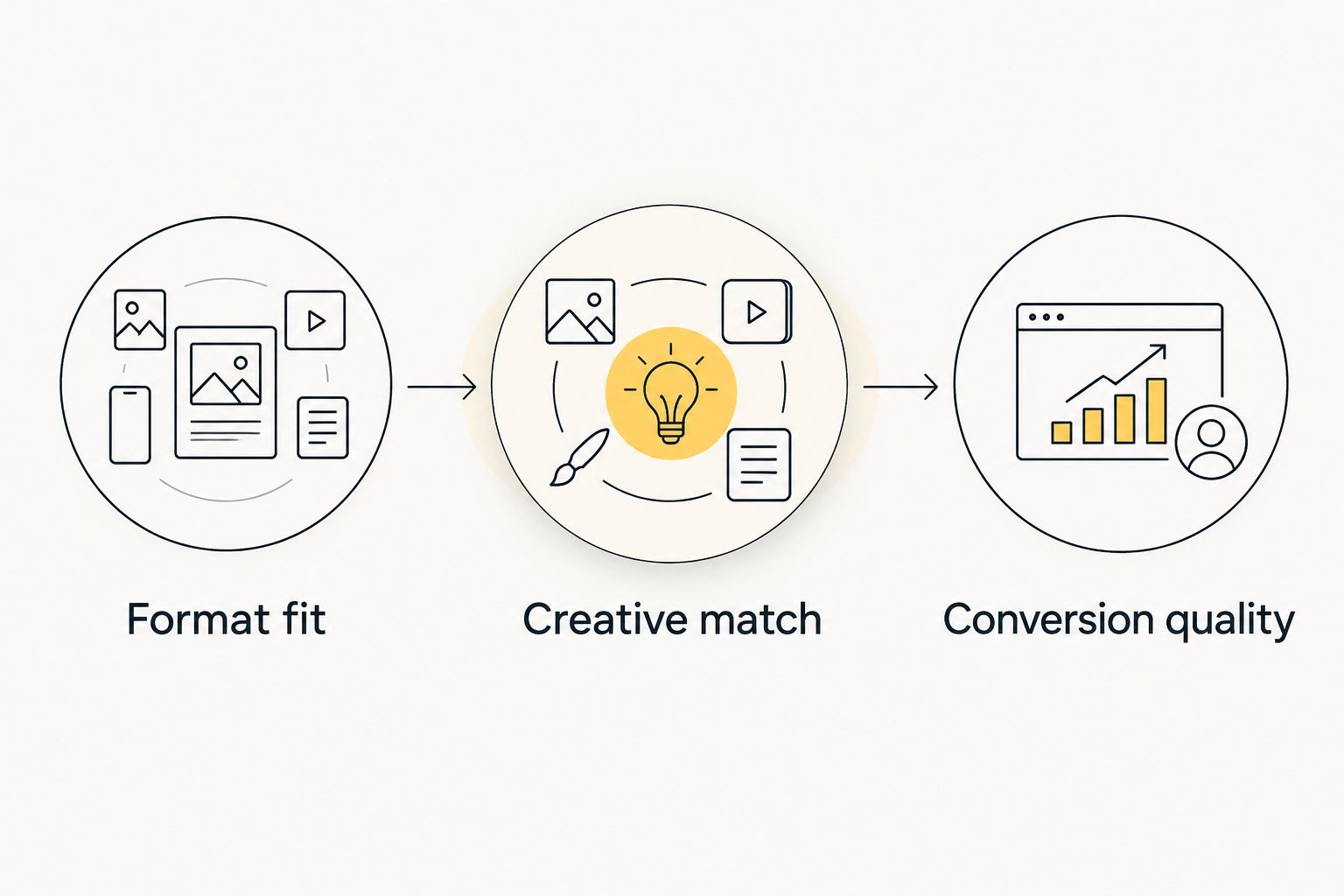
Use these labels to separate the work:
- Format fit: Does the ad experience suit the offer?
- Creative match: Does the destination fulfill the ad’s promise?
- Conversion quality: Does the advertiser accept the resulting action?
A focused PropellerAds campaign remains the better choice when you do not need a mixed-format plan and its existing workflow already suits the offer.
Both offer self-serve buying; moderation still matters
Both networks offer self-serve campaign buying. That is a tie on access, not proof that their campaign controls or approval processes are identical.
With EZmob, advertisers can register, fund their account, and launch campaigns without a sales call. New campaigns go through creative moderation before they go live. Build approval into your launch plan instead of treating account funding as the final step.
For either network, review the current rules for the offer, creative, destination, and GEO. An affiliate program’s permission to promote an offer does not replace the traffic network’s advertising rules.
Prepare the campaign before submitting it:
- Confirm the offer accepts your intended traffic source and format.
- Make sure the destination works on the devices you intend to target.
- Check that the creative accurately describes the destination.
- Verify the conversion event and attribution setup.
- Review current restrictions before committing campaign spend.
Self-serve access removes the sales-call requirement; it does not remove campaign preparation. A clean submission gives you a better starting point than a rushed campaign with unresolved tracking or compliance questions.
PropellerAds wins for buyers preserving a working setup
For an advertiser already running accepted, profitable conversions on PropellerAds, staying with that setup preserves continuity. Moving the same offer to another network changes the traffic source, even if the landing page remains identical.
That is a genuine reason to choose PropellerAds. Existing campaign history helps you assess changes against your own baseline rather than starting every decision from scratch.
The drawback is treating familiarity as proof that another source cannot work. Your established network is a baseline, not a permanent exclusion rule.
In 2026, use a separate expansion test if you want to evaluate another network. Keep the original campaign distinct so the new source does not blur its reporting.
Before expanding, document:
- The offer and conversion event.
- The GEO and device conditions.
- The creative and landing-page version.
- The accepted acquisition cost you need to meet.
- The attribution rules used to evaluate conversions.
Keep PropellerAds as the winner for continuity when the existing campaign meets your economics. Test another source because you have a specific expansion question, not because a comparison article promises an automatic improvement.
Neither network wins on CPA without your campaign results
There is no defensible universal winner for conversion cost. Different offers, GEOs, devices, landing pages, and traffic sources produce different outcomes.
Compare accepted conversions rather than treating every recorded event as equally valuable. A lead rejected by the advertiser is not equivalent to an accepted lead, even when both appear as conversions in an initial report.
Keep the evaluation readable. Separate campaign spend, recorded conversions, accepted conversions, and revenue. Then calculate acquisition cost against the outcome that matters to the business.
For popunder campaigns, the guide to buying pop traffic profitably provides a focused next read without turning this comparison into a claim that all pop traffic performs alike.
Both networks must earn their place through campaign-level economics. Neither a recognizable name nor a broad format menu replaces that requirement.
Pricing: separate billing from optimization
For this 2026 decision, distinguish how you pay for traffic from how you want the campaign to perform. CPC describes payment per click; CPM describes payment per thousand impressions. CPA describes acquisition cost or an acquisition-based arrangement, depending on the context.
Check the current billing terms for the exact format and campaign type before funding either account. Do not assume that an optimization goal changes the billable event.
The central tradeoff is control versus predictability. A bid and spend limit help define what you are willing to spend, but they do not guarantee a fixed acquisition cost. A conversion goal expresses the desired outcome, not a promise that the offer will convert.
Compare practical funding terms as well as campaign mechanics:
- Which payment methods fit your buying operation?
- What conditions apply to unused account funds?
- Which event triggers a charge for the selected campaign?
- How will you reconcile billed traffic with tracker results?
Choose on usable campaign economics, not an isolated traffic rate. A lower click cost is not a better deal when the resulting acquisitions fail your acceptance criteria.
Final verdict: choose for the campaign you will launch
Choose EZmob if you are a mixed-format media buyer
Choose EZmob when your campaign plan needs self-serve access to popunder, push, display, and native traffic. It fits a buyer who wants to test different ad experiences while keeping the offer and measurement discipline clear.
The advantage is format coverage. The constraint is the work required to prepare distinct creatives and validate each traffic source; broader access does not establish better CPA.
Choose PropellerAds if you are a focused or established buyer
Choose PropellerAds when its push and pop workflow, CPA Goal approach, or existing campaign history is the reason for the decision. It fits a buyer with a specific campaign requirement rather than a need to explore every available format.
The advantage is alignment with that workflow. The constraint is that an optimization feature or familiar dashboard cannot substitute for accepted conversions and sound acquisition economics.
| Dimension | Winner |
|---|---|
| Pop, push, display, and native campaign plan | EZmob |
| CPA Goal as a specific buying requirement | PropellerAds |
| Mixed-format creative planning | EZmob |
| Self-serve campaign access | Tie |
| Preserving an established PropellerAds setup | PropellerAds |
| Lowest accepted acquisition cost | Determined by campaign results |
| Pricing and funding fit | Determined by current terms and buyer requirements |
FAQ
Is EZmob better than PropellerAds in 2026?
EZmob is the better fit when your campaign plan needs popunder, push, display, and native traffic in one self-serve advertising network. PropellerAds is the better fit when its push and pop workflow, CPA Goal optimization, or existing campaign history drives your decision.
Which network should a beginner affiliate marketer choose?
A beginner should choose the network that supports the intended offer and ad format, then verify tracking before buying traffic. Start with a clear campaign question rather than testing several formats and landing pages at once.
Does PropellerAds CPA Goal guarantee my target acquisition cost?
No, a CPA optimization goal is not a guarantee that actual acquisitions will meet the target. Check current campaign requirements and evaluate accepted conversions against total campaign spend.
Can I buy push and popunder traffic through EZmob?
Yes, EZmob offers self-serve push and popunder campaigns. Its stated advertiser formats also include display, native, video, and direct-click/redirect traffic.
Which network has cheaper traffic?
Neither network is universally cheaper for the acquisition outcome you need. Compare the selected campaign’s billing terms and accepted acquisition cost rather than treating a low click or impression rate as proof of better value.
Should I move a working PropellerAds campaign to another network?
Keep a working PropellerAds campaign separate from any expansion test. A new network changes the traffic source, so assess it independently before changing the established campaign.
What should I check before launching an affiliate campaign?
Check offer permissions, network rules, destination functionality, conversion tracking, and the campaign’s billing terms. For EZmob, account for creative moderation before a new campaign goes live.
One last thing
Your most useful 2026 comparison is the one you can explain after the campaign ends. If you changed the format, creative, landing page, and network together, a better result still leaves the cause unclear.
Name the buying question before funding the test. Decide whether you are assessing a new traffic source, a different format, or a different optimization workflow, then keep the other parts consistent where the format permits.
Related guides
- PropellerAds alternatives for advertisers
- Self-serve advertising platforms
- Push notification ad networks
Start your next advertising campaign
Explore self-serve popunder, push, display, and native advertising before choosing your campaign format.