
Choose EZmob if you want self-serve access to pop, push, display, and native campaigns; choose RichAds if your buying plan centers on push and pop, particularly when you already have profitable campaigns there. This ezmob vs richads comparison separates platform fit from the campaign results that should decide your budget in 2026.
- EZmob is the better fit for media buyers planning campaigns across pop, push, display, and native advertising.
- RichAds is the better fit when established push or pop campaigns already work on its inventory.
- The ezmob vs richads decision should follow tracked conversions, not advertised traffic scale.
- Compare push advertising and popunder traffic separately; combining formats hides the source of campaign performance.
Why this matters
Choosing an ad network means choosing where your offer meets traffic. It does not determine whether the offer converts, whether your tracking works, or whether your landing page matches the visitor's intent.
For an affiliate buyer in 2026, the useful comparison is narrower than a feature checklist: which platform fits your next campaign, and which produces acceptable acquisition economics? If you are comparing several options rather than replacing a working campaign, the RichAds alternatives guide covers that broader decision.
EZmob is a self-serve advertising network for media buyers who want to buy across pop, push, display, and native formats. RichAds belongs on the shortlist for push and pop buying. Neither platform earns your budget simply by belonging to those categories.
At a glance: platform fit in 2026
| Dimension | EZmob | RichAds |
|---|---|---|
| Best for | Buyers planning campaigns across several ad formats | Buyers focused on push and pop, especially existing users |
| Format breadth | Popunder, push, display/banner, native, video, and direct-click/redirect | Push and pop are central to its advertising proposition |
| Campaign launch | Self-serve signup, funding, and campaign setup; creative moderation before launch | A separate campaign environment to learn and validate |
| Existing campaign continuity | Best evaluated as a new traffic source unless already in use | Stronger fit when your current campaigns already perform there |
| Optimization priority | Separate results by format, offer, and traffic source | Separate results by format, offer, and traffic source |
| Measurement | Requires reliable conversion tracking for a useful comparison | Requires reliable conversion tracking for a useful comparison |
| Pricing decision | Evaluate current buying terms against your allowable CPA | Evaluate current buying terms against your allowable CPA |
| Standout fit | Access to several advertising formats through a self-serve platform | A focused choice for an established push-and-pop buying workflow |
The table identifies operating fit, not a universal performance ranking. A broad format catalog helps you explore different acquisition routes; an established buying workflow helps you avoid disrupting campaigns that already work.
EZmob wins on breadth when your plan extends beyond push and pop
The clearest reason to choose the client's platform is its stated format range. You can build campaigns around popunder, push notifications, display/banner, native, video, and direct-click/redirect traffic rather than treating every offer as a push campaign.
That distinction matters when your acquisition plan calls for different creative approaches. A banner placement, a native ad, and a popunder do not present an offer in the same way. Their landing pages and evaluation criteria should reflect those differences.
Best for: a media buyer planning distinct tests across several formats. The advantage is access to those campaign types through a self-serve advertising platform, not a promise that every format will suit your offer.
The tradeoff is operational complexity. More formats mean more creative decisions, more segmented reporting, and more opportunities to confuse an attractive blended average with a profitable campaign.
Start with the format that matches your offer and funnel. Add another only when you can explain what it tests: a different placement, a different message, or a different visitor journey. Format breadth is useful when you have a reason to use it.
RichAds wins on continuity for buyers with working campaigns
RichAds is the better choice for a buyer whose existing campaigns there already meet their acquisition target. Keep those campaigns running while evaluating another source separately. Replacing a working source merely to simplify a vendor list is not a performance strategy.
That recommendation is deliberately conditional. It does not claim that RichAds converts better across every GEO, vertical, or landing page; it recognizes the value of campaign evidence you already possess.
Best for: an established RichAds buyer with validated push or pop campaigns. Your advantage is familiarity with that campaign environment and a record of results for your own offer.
The limitation is that existing success does not validate a new campaign automatically. A new GEO, a different offer, or another format still needs its own test. Historical performance is a reason to preserve a working campaign, not a reason to approve every future one.
Treat an additional network as a separate acquisition experiment. Keep the original campaign's economics visible so you can distinguish incremental performance from a simple transfer of spend.
EZmob fits buyers who want a self-directed launch
The platform's advertiser workflow is explicit: sign up, fund the account, and create campaigns without a sales call. New campaigns go through creative moderation before going live.
Best for: an affiliate marketer who wants to control campaign setup rather than start with a sales conversation. Self-serve access removes that conversation from the launch path; it does not remove review requirements or the need to prepare a sound campaign.
Before submission, check the destination, creative, offer restrictions, and tracking. An ad that sends visitors to the wrong landing page remains a bad launch even when the account setup is straightforward.
The limitation is practical: self-serve does not mean that every campaign goes live immediately. Build moderation into your launch plan, and avoid tying an unapproved campaign to a time-sensitive promotion.
For a 2026 buying decision, distinguish access from support. The fact that you can launch independently answers how you get started. It does not establish response times, account-management arrangements, or troubleshooting outcomes, so those should not decide this comparison without checking current terms.
RichAds fits a deliberately narrow push-and-pop buying plan
RichAds is a relevant choice when your plan is specifically about push and pop advertising. You do not need a broad format catalog if the immediate job is to run a focused campaign in those formats.
Best for: a push-and-pop buyer who wants to keep the campaign brief narrow. The strongest version of that case is an existing user who already knows the workflow and can evaluate new campaigns against their own past results.
This is a fit verdict, not a claim of exclusive capabilities. The client's platform also offers push and popunder, so choosing RichAds requires a reason beyond the presence of those formats alone.
The downside of a narrow buying plan is that it leaves other acquisition routes unexplored. That is acceptable when intentional. It becomes a problem when a buyer repeatedly changes bids on an unsuitable funnel instead of reconsidering the format.
Write the buying brief before choosing the network: offer, GEO, device, format, conversion event, and allowable acquisition cost. If the brief only calls for push or pop, evaluate both platforms on that campaign rather than awarding points for formats you will not use.
Both need source-level optimization, not blended averages
Neither network changes the basic job of a performance marketer: identify where spend produces the conversion event that matters. A blended account result is too broad to explain which campaign deserves another allocation.
Separate push from popunder. Also separate different offers and GEOs. Otherwise, a profitable segment can conceal a losing one, and your next budget decision will rest on the wrong average.
Best for either platform: buyers who can trace a conversion back to the campaign that generated it. The limitation is the same on both sides: campaign controls cannot compensate for an unclear success event.
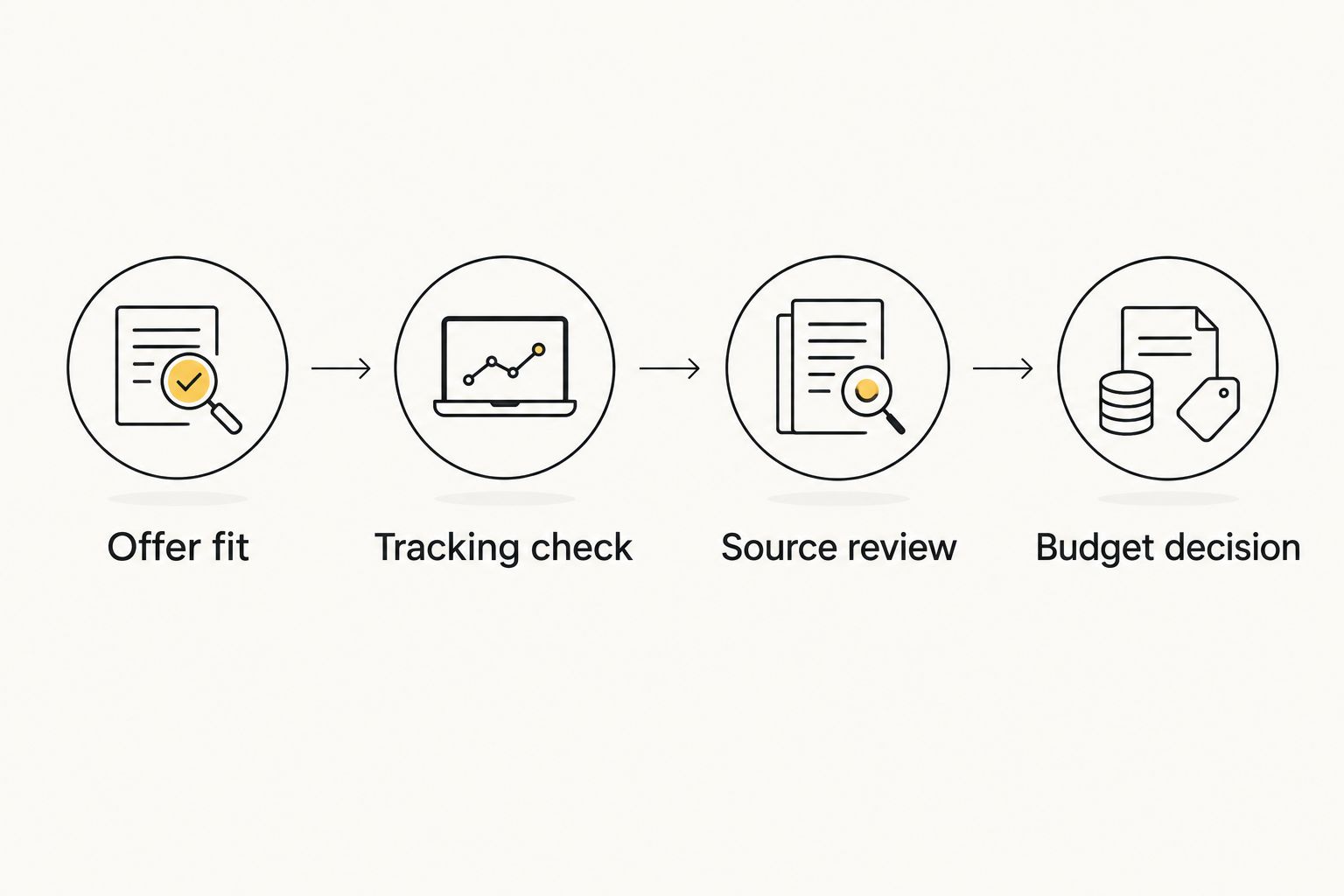
Use these functional checkpoints before increasing spend:
- Offer fit: The offer accepts the intended traffic type and GEO.
- Tracking check: The conversion event reaches your reporting correctly.
- Source review: Available source identifiers connect spend with outcomes.
- Budget decision: Continue, revise, or stop based on acquisition economics.
The sequence is a buying discipline, not a claim that both dashboards expose identical controls. Check which identifiers and reporting fields are available before designing your optimization workflow.
A low bid is not a verdict. A campaign earns continued spend when its acquisition economics support the offer.
Both require clean measurement before a performance verdict
The useful winner is the network that produces acceptable results for your specific campaign. To identify it, compare equivalent tests rather than different offers under different conditions.
Keep the offer, GEO, device scope, conversion definition, and landing page consistent when testing the same format. Label network traffic separately in your tracker. If you change the landing page while switching networks, you are evaluating a combined change, not isolating the traffic source.
Best for either platform: buyers with a defined conversion event and dependable attribution. The shared drawback is that a report full of clicks or visits does not establish whether the advertiser acquired valuable customers or leads.
Check lead acceptance, sale validation, or the relevant downstream outcome when those determine your revenue. An initial conversion event and an approved affiliate payout are not automatically the same thing.
For your 2026 comparison, record what changed between tests. Different traffic sources cannot be made identical, but a documented test makes the result interpretable. An undocumented test produces a winner's name without explaining why it won.
Pricing: compare acquisition economics, not a rate headline
Both choices involve buying advertising traffic, but the decision should use the current billing model and campaign terms for the format you intend to run. Do not assume that a push campaign and a popunder campaign use interchangeable buying mechanics.
The important tradeoff is predictability versus flexibility. A firm campaign spend limit controls exposure; bidding decisions determine how you pursue traffic within that limit. Check the available controls rather than assuming that a familiar setting works the same way on another platform.
Your allowable CPA comes from the offer's economics. Account for payout validation and other applicable campaign costs before deciding what acquisition spend is acceptable.
Neither platform wins on pricing without a matched campaign comparison. A cheaper traffic unit is not necessarily a cheaper conversion, and a higher bid is not automatically wasteful if the resulting acquisitions justify it.
Review current terms before funding a test. Then make the budget decision from tracked outcomes, not from a rate mentioned in an old comparison article.
Final verdict: choose by the campaign you need to run
Choose EZmob if you are a multi-format affiliate buyer
Choose the self-serve advertising network when your campaign plan includes pop, push, display, or native and you want to set up those tests yourself. Its stated format range is the concrete advantage in this comparison.
Keep the first campaign focused. Expanding into several formats before validating tracking creates more reporting work without producing a clearer answer.
Choose RichAds if you are an established push-and-pop buyer
Choose RichAds when your existing campaigns there meet your targets and your next test remains within that buying workflow. Preserve working acquisition while testing alternatives separately.
If you are new to both networks, push-and-pop focus alone does not establish a performance winner. Use a controlled campaign test rather than inheriting someone else's preference.
One-glance scorecard
| Dimension | Winner |
|---|---|
| Breadth across the stated advertising formats | EZmob |
| Continuity for existing profitable RichAds campaigns | RichAds |
| Stated self-serve launch without a sales call | EZmob |
| Fit for an established RichAds push-and-pop workflow | RichAds |
| Source-level optimization discipline | Tie |
| Conversion measurement requirements | Tie |
| Pricing and acquisition economics | Campaign results decide |
FAQ
Is EZmob better than RichAds in 2026?
EZmob is the better fit when you want self-serve campaigns across pop, push, display, and native. RichAds is the better fit when you already have working push or pop campaigns there; a matched test should decide new budget allocations.
Which network should I choose for push advertising?
Choose the network that meets your acquisition target in a controlled push campaign test. Both belong in a push advertising comparison, but format access alone does not establish conversion performance.
Should I move profitable RichAds campaigns to another network?
Keep profitable RichAds campaigns running while you test another network separately. Moving all spend at once removes the working campaign you need as a reference.
Does EZmob offer more than push and popunder?
EZmob offers display/banner, native, video, and direct-click/redirect traffic alongside push and popunder. Use additional formats when they serve a defined campaign objective, not simply because they are listed.
Can I launch an EZmob campaign without a sales call?
Yes, EZmob lets advertisers sign up, fund an account, and set up campaigns themselves. New campaigns go through creative moderation before going live.
Which network has the cheaper traffic?
Use current campaign terms and tracked acquisition costs to make that decision. A lower traffic-unit cost does not establish a lower CPA for your offer.
What should stay the same when testing both networks?
Keep the offer, GEO, device scope, conversion event, landing page, and ad format consistent. Separate the networks in your tracker so you can attribute outcomes correctly.
One last thing
Before comparing another feature, verify that your conversion event represents the outcome you get paid for. A perfectly tracked intermediate action can still lead you to fund the wrong campaign.
The most useful network comparison starts after that check. Decide what counts as success, isolate the test, and give the next allocation to the campaign that earns it.
Related guides
- Is buying pop traffic profitable for affiliate marketers?
- Push ad campaign alternatives to Adsterra
- Self-serve advertising platforms
Start advertising on EZmob
Plan a focused campaign across pop, push, display, or native traffic.