
Choose EZmob if you want self-serve access to push, popunder, display, and native campaigns; choose Adsterra if your campaign specifically calls for its Social Bar format. This EZmob vs Adsterra comparison separates format fit from campaign performance so you can make a useful buying decision in 2026.
- EZmob vs Adsterra: choose EZmob for self-serve push and popunder buying; choose Adsterra for Social Bar campaigns.
- Browser push and in-page advertising are different placements; compare the actual format, not just the network name.
- Neither network wins on CPA without a matched campaign test and approved conversion data.
- Keep a profitable existing campaign running while you test another traffic source separately.
Why this comparison matters
You are buying access to inventory, not a guarantee that your offer will convert. A network can match your preferred format and still produce unprofitable traffic for a particular landing page, GEO, or offer.
The useful distinction is straightforward: EZmob is a self-serve advertising network for media buyers buying push, popunder, display, and native traffic. Adsterra gives buyers another route to advertising inventory, including its Social Bar format. Neither name tells you which source will deliver your best approved CPA.
If push is your starting point, the guide to Adsterra alternatives for push ad campaigns helps frame the format-specific choice. Keep this comparison focused on the buying workflow and the campaign you actually intend to launch.
At a glance: EZmob vs Adsterra in 2026
| Dimension | EZmob | Adsterra |
|---|---|---|
| Best for | Buyers seeking self-serve push, popunder, display, and native campaigns | Buyers seeking Social Bar campaigns or retaining proven Adsterra traffic |
| Format fit | Push, popunder, display/banner, native, video, and direct-click/redirect traffic | Popunder, banners, native advertising, and Social Bar |
| Push versus in-page | Offers push notification advertising | Social Bar provides an in-page advertising option |
| Popunder campaigns | Supports popunder traffic buying | Supports popunder traffic buying |
| Self-serve access | Advertisers register, fund an account, and launch without a sales call | Offers self-serve advertiser access |
| Existing campaign continuity | A separate source to test against your incumbent | The better continuity choice when an existing campaign is profitable |
| Performance decision | Judge by approved conversions and acquisition cost | Judge by approved conversions and acquisition cost |
| Pricing model | Advertiser-funded campaign buying | Advertiser-funded campaign buying; billing basis depends on the format |
The table identifies buying scenarios, not an overall performance ranking. For your 2026 shortlist, start with the placement your offer needs, then compare campaign economics under controlled conditions.
EZmob is the clearer fit for a push-led buying brief
Best for: media buyers who specifically want push notification campaigns alongside other traffic formats. The platform's stated offering includes push, popunder, display/banner, and native advertising, giving you a direct match when those formats appear in your campaign brief.
That advantage is about access, not conversion superiority. An available format is useful only when your creative, destination page, and offer suit the placement. A push campaign and a popunder campaign should not share a performance assumption simply because you buy them through the same account.
Write the format into your test brief before choosing a network. Specify whether you need a notification placement, a page-based ad, a banner, or a landing-page visit from popunder traffic. That prevents a broad request for affiliate traffic from turning into an unmatched comparison.
The limitation is equally clear: having several formats does not establish which one works for your offer. Start with the format you understand, then expand after tracking confirms useful conversions.
Adsterra wins when Social Bar is the required format
Best for: advertisers whose creative brief specifically calls for Adsterra's Social Bar. Social Bar is an Adsterra format, so choosing that placement gives you a concrete reason to select the network rather than a vague preference for another dashboard.
Do not treat Social Bar and browser push as interchangeable. In-page ads appear within a website experience; browser push uses a notification channel. Their presentation and interaction context differ, which changes what your creative must communicate.
For a Social Bar campaign, assess whether the format suits the offer and whether your landing page continues the same message. Use the placement's actual creative requirements rather than adapting a push campaign by name alone.
The tradeoff is that a format-specific win is not a network-wide win. A successful Social Bar campaign does not establish that Adsterra will beat another source on popunder, native, or banner traffic. Keep the verdict attached to the placement that produced it.
Both support popunder; the landing page decides the useful test
Best for: affiliate buyers comparing popunder sources with a prepared landing-page funnel. Both networks support popunder buying. That makes popunder a valid head-to-head test, but it does not establish equal inventory or equal results.
A popunder campaign puts more of the persuasion burden on the destination page. Your opening message needs to explain the offer immediately, and the page needs to work on the devices receiving the traffic. A creative concept designed for a banner does not automatically solve that problem.
Hold the offer, GEO, device scope, destination, and conversion definition steady when comparing sources. Separate the campaigns in your tracker so approved conversions remain attributable to the network that generated them.
The honest verdict is a tie on format availability. Choose the popunder source on observed acquisition economics, not on an assumed network ranking. Each source still needs its own exclusions and optimization decisions; copying a result from one network to another skips that work.
Both offer self-serve access; launch discipline matters more
Best for: buyers who want to set up advertising without making a sales-led purchase. Both platforms offer self-serve advertiser access. On the client platform, advertisers sign up, fund an account, and launch campaigns themselves, with creative moderation before new campaigns go live.
Self-serve access removes the sales call from the buying process. It does not remove responsibility for campaign setup, policy compliance, or tracking. Prepare those items before funding a test.
Check the destination URL, tracking parameters, conversion event, and creative message together. A valid campaign should send the visitor to the intended page and return the intended conversion signal. A dashboard showing activity cannot establish that the full path works.
For a 2026 launch, allow for review rather than treating submission as immediate delivery. Avoid changing the offer or destination while trying to diagnose the first results; otherwise you are comparing different funnels inside the same campaign history.
The verdict is a workflow tie. Self-serve buying is useful on both sides, but neither workflow replaces a functioning acquisition funnel.
Adsterra wins continuity when your existing campaign is profitable
Best for: media buyers already receiving approved, economically useful conversions from Adsterra. Keep that campaign running while you test another source. An established result is a stronger reason to retain inventory than an untested promise elsewhere.
Switching the entire campaign at once makes the comparison harder to interpret. You lose the incumbent baseline and introduce a new source at the same time. A separate test preserves the distinction between the campaign you know and the campaign you are evaluating.
This is not an argument against adding another network. Additional sources let you test a different inventory mix. The point is to fund that decision with evidence instead of replacing working traffic because another platform offers the same format.
The limitation is that continuity applies only to a genuinely useful campaign. Spend, clicks, and dashboard conversions alone do not prove profitability. Confirm approvals and downstream quality before giving an incumbent source this advantage.
Adsterra wins this scenario because the existing campaign has earned its place—not because incumbent networks always deserve the budget.
Neither network wins CPA before a matched test
Best for: performance marketers whose real objective is approved acquisitions. A format comparison can tell you where to start. Only your campaign results can tell you where to keep spending.
For an EZmob vs Adsterra test in 2026, use the same economic definition on both sides. If your affiliate program pays only for approved leads, compare approved leads rather than submitted forms. If your objective is a completed purchase, a landing-page click is not the deciding event.
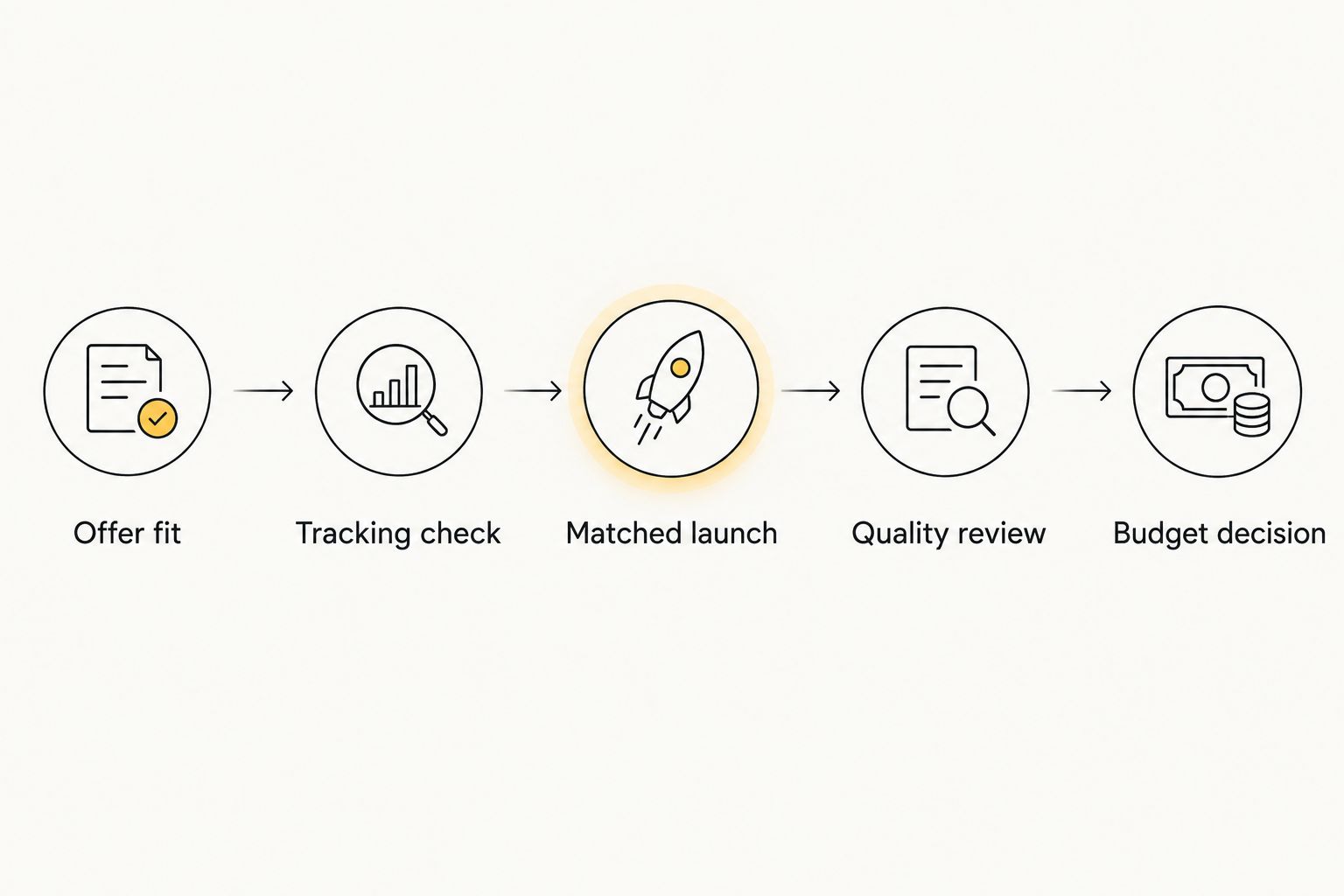
Use this sequence to keep the decision clean:
- Offer fit: Confirm that the offer allows the selected traffic source and placement.
- Tracking check: Verify that visits and conversions reach the correct campaign records.
- Matched launch: Keep the offer, GEO, device scope, and destination consistent.
- Quality review: Examine approvals and downstream outcomes, not just dashboard activity.
- Budget decision: Retain or expand the source that meets your acquisition economics.
The sequence separates setup errors from buying results. It also keeps you from treating different conversion events as equivalent evidence.
A tie here is deliberate. Neither network has earned a CPA verdict for your offer until its traffic produces the outcomes you count as successful. Reject a headline winner that substitutes format availability for conversion evidence.
Pricing: compare buying mechanics, not a fixed rate
Both platforms use advertiser-funded campaign buying rather than making the network name itself a fixed-price acquisition product. Your relevant cost is the spend required to generate the outcome you need. The billing event and available bidding options need to match the selected format.
In traffic buying, CPM means payment is tied to impressions, while CPC means payment is tied to clicks. Neither model guarantees an approved conversion. A predictable billing unit still leaves conversion performance to the campaign.
For your 2026 comparison, separate these questions:
- What event triggers the advertising charge?
- What bid and budget controls apply to the selected placement?
- What event counts as a conversion in your tracker?
- Which conversions qualify for payment or business value?
The tradeoff is predictability of the billed event versus uncertainty of the acquisition outcome. Compare both networks using acquisition cost and conversion quality after aligning those definitions. A lower traffic unit cost is not automatically a better campaign.
Final verdict: choose the network for the campaign
Choose EZmob if you are a push-led affiliate buyer
Choose EZmob if your brief requires self-serve push notification buying and you also want access to popunder, display, and native campaigns. That is a specific platform-fit decision, not a claim that every format will outperform Adsterra.
Keep each format's test separate. Use the same business objective, but adapt the creative and landing-page approach to the placement. Expand only when approved outcomes support the decision.
Choose Adsterra if you need Social Bar or have proven traffic
Choose Adsterra if Social Bar is the required placement, or if your existing Adsterra campaign already meets your acquisition economics. Those are genuine reasons to favor it.
For a new popunder or banner test, neither network gets an automatic win. Match the campaign conditions and let the approved results decide where the budget belongs.
One-glance scorecard
| Dimension | Winner |
|---|---|
| Push-led buying brief | EZmob |
| Social Bar requirement | Adsterra |
| Popunder availability | Tie |
| Self-serve access | Tie |
| Profitable existing Adsterra campaign | Adsterra for continuity |
| Approved CPA | Determined by a matched campaign test |
| Pricing-model suitability | Determined by format and acquisition economics |
FAQ
Is EZmob better than Adsterra in 2026?
EZmob is the clearer fit for a self-serve push-led buying brief, while Adsterra wins when Social Bar is required. Neither network has an automatic advantage on approved CPA; compare matched campaigns.
Which is better for push advertising?
EZmob fits advertisers specifically seeking push notification campaigns. Adsterra’s Social Bar is an in-page option, so define the placement you need before treating the formats as substitutes.
Which network should I use for popunder traffic?
Both EZmob and Adsterra support popunder advertising. Choose using approved conversion results from campaigns with the same offer, GEO, device scope, and destination.
Can I advertise without a sales call?
EZmob lets advertisers register, fund an account, and launch campaigns without a sales call. New campaigns still go through creative moderation before they go live.
How should I compare the cost of the networks?
Compare the spend required to produce your approved acquisition event. Check the billing basis for the selected format, then distinguish traffic cost from conversion cost.
Should I move a profitable Adsterra campaign?
Keep a profitable Adsterra campaign running while testing another source separately. Preserve the incumbent baseline so you can judge the new campaign without losing the result you already know.
What should an affiliate marketer check before launching?
Confirm offer permissions, placement fit, tracking, and the conversion approval rule before launching. Those checks prevent setup problems from being mistaken for poor network performance.
One last thing
Name your conversion before choosing your winner. A lead submission, an approved lead, and a paid customer are different outcomes; a comparison becomes useful only when both campaigns use the same one.
Related guides
- Buying pop traffic for affiliate campaigns
- Self-serve advertising platforms
- CPA ad networks for affiliate marketers
Start advertising on EZmob: choose your format, prepare your tracking, and launch a campaign you can evaluate against approved conversions.