
Yes, you can monetize a website without banner ads through affiliate links, sponsorships, paid content, products, or non-banner formats such as popunder and push. The trade-off is that removing banners does not automatically remove advertising friction: each method changes what visitors see, what they consent to, or what you must sell and maintain.
- You can monetize website without banner ads using affiliate links, sponsorships, subscriptions, popunder, or push.
- Choose affiliate links for purchase-focused content; choose subscriptions when readers have a recurring reason to pay.
- EZmob supports publisher monetization through pop, push, and native formats; assess visitor experience before adding advertising.
- Banner-free is not ad-free: popunder, push, and sponsored recommendations still require clear boundaries.
Why this matters
Decide whether you want to remove banner placements or remove third-party advertising altogether. Those are different goals. Replacing a sidebar banner with an intrusive interruption does not solve a visitor-experience problem.
For your 2026 monetization plan, start with the action visitors already want to take. Someone comparing products has a different reason to visit than someone reading a tutorial or returning for specialist analysis. Match the revenue method to that reason rather than adding every available format.
The website monetization guide for bloggers covers the broader topic. This page focuses on the decision you face when banners are off the table.
Can you monetize a website without banner ads?
Yes. You can earn from a transaction, a direct commercial relationship, paid access, or advertising that does not occupy a conventional banner slot. The right choice depends on what your visitors need and which parts of their experience you will protect.
Use this comparison to separate the revenue mechanism from its practical cost. Best for describes the audience fit, not a guaranteed earnings outcome.
| Method | Best for | Main advantage | Main limitation |
|---|---|---|---|
| Affiliate links | Purchase-focused reviews and tutorials | Connects revenue to a relevant recommendation | Depends on tracked, qualifying actions and program terms |
| Direct sponsorships | A defined audience advertisers want to reach | Lets you negotiate the placement and scope | Requires selling, delivery, and reporting |
| Paid content | Readers who need recurring specialist value | Charges directly for access | Requires a continuing reason to subscribe |
| Products or services | Visitors with a problem you can solve | Connects content to your own offer | Adds fulfillment, support, or client work |
| Popunder | Publishers willing to test a separate advertising window | Does not require a banner slot in the page layout | Introduces an interruption outside the main page |
| Browser push | Visitors who choose to receive notifications | Uses a permission-based notification channel | Requires consent and careful control of messages |
| Native advertising | Content sites that can label paid recommendations clearly | Fits advertising into a content-style placement | Still occupies page space and needs disclosure |
Do not treat these methods as interchangeable. An affiliate link needs relevant intent; a subscription needs continuing value. An advertising format needs a visitor experience you are prepared to defend.
Affiliate links: best for purchase-focused content
Affiliate links fit pages that help readers choose or use something. A comparison, buying guide, or practical tutorial can include a relevant referral without adding a display slot.
The advantage is contextual fit. The limitation is dependence on the merchant's tracking, qualifying-action rules, and program terms. A click alone does not establish that you earned a commission.
Put the recommendation where it answers a question. Explain who the option suits, who should skip it, and any limitations you can substantiate. Add a clear disclosure near the recommendation rather than expecting readers to find a separate policy page.
Choose affiliate links when a purchase is a natural next step. Do not turn an informational answer into a product pitch merely because a referral program exists.
Direct sponsorships: best for a clearly defined audience
Direct sponsorships let you sell access to an audience through a disclosed placement, sponsored resource, or newsletter inclusion. You agree with the sponsor on what appears and what you will deliver.
The advantage is control over the arrangement. The limitation is operational work: prospecting, negotiation, approvals, publication, and reporting become your responsibility.
Before accepting a sponsor in 2026, define the deliverable, labeling, editorial boundaries, and reporting scope. Keep paid placement separate from editorial endorsement. A sponsor buying visibility should not silently buy the conclusion of an independent review.
Choose sponsorships when you can explain who your audience is and why that audience matters to the sponsor. Avoid commitments to outcomes you cannot control.
Paid content: best for recurring specialist value
Subscriptions and memberships charge readers directly for access. They fit resources that readers need repeatedly, such as ongoing analysis, maintained reference material, or an active specialist community.
Direct payment reduces dependence on an advertising placement. It also creates an obligation: readers need a reason to continue paying, not just a reason to join once.
Define what remains public before introducing a paywall. Your public pages still need to answer the questions they promise to answer. Avoid attracting a visitor with a specific answer and withholding every useful detail behind registration.
Choose paid content when the recurring benefit is clear without a sales explanation. If the value ends after a single download, consider a standalone product instead.
Products or services: best for a problem you can solve
A website can generate revenue by selling your own resource or connecting visitors to a service. The content helps visitors understand the problem; the offer provides a defined way to address it.
The advantage is control over the offer. The limitation is delivery: customer questions, maintenance, fulfillment, or client work do not disappear because the sale started on a website.
Describe the outcome, scope, and exclusions plainly. If a tutorial answers a question completely, let it do that job; introduce your offer only where additional help is relevant.
Choose products or services when you can deliver the promised result. Do not mistake an interested audience for a finished offer.
Non-banner advertising: best for publishers retaining ad revenue
Popunder, browser push, and native advertising let you consider advertising outside conventional banner placements. They do not mean the same thing, and none should be described as invisible monetization.
A popunder opens an advertising window behind the active window. Browser push uses notifications after the visitor grants permission. Native advertising uses content-style placements that still need clear identification as advertising.
EZmob is a fit for website publishers evaluating pop, push, and native monetization without relying on banner placements. These are supported publisher formats, not evidence that a particular format will earn more on your site.
The benefit is access to alternatives to banner inventory. The drawback remains visitor friction: a separate window, a permission request, or a paid recommendation changes the experience. Evaluate the actual implementation rather than choosing from a format name alone.
For a 2026 test, keep the original visitor task intact. Reading an answer, using a tool, or completing a purchase should remain understandable after monetization is introduced.
Why banner-free monetization results vary
Results depend on the fit between your audience, your revenue method, and the way you implement it. Separate these factors before attributing a change to the format itself:
- Visitor intent: A reader researching a purchase has a different next step from someone seeking a quick factual answer.
- Audience relevance: A sponsor or affiliate offer needs a meaningful connection to the people visiting the page.
- Permission and placement: A notification request, paid recommendation, and separate advertising window create different interactions.
- Delivery requirements: Subscriptions, products, and services require work beyond publishing the original page.
- Measurement rules: Ad earnings, affiliate commissions, and direct sales use different reporting and attribution systems.
- Traffic mix: Changes in referral source, device, or GEO can complicate a before-and-after comparison.
Do not compare unrelated traffic segments and call the difference a format win. Document what changed alongside monetization so you can interpret the result.
How do you choose a banner-free monetization method?
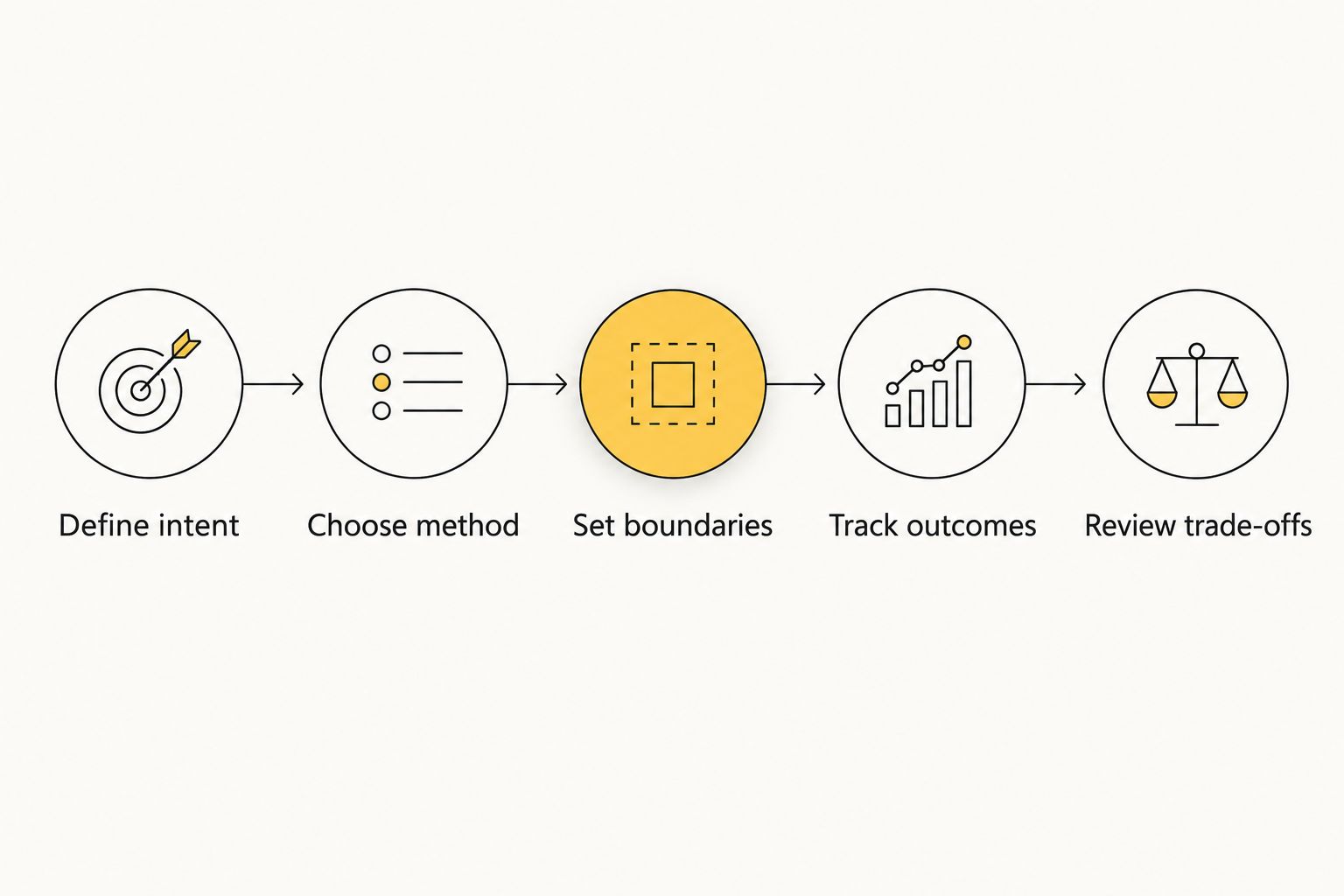
Start with a method that matches the page's purpose, then test it without changing the rest of the experience unnecessarily. Use the following sequence to keep the decision practical.
- Define intent. Write down why someone visits the page and what successful completion looks like.
- Choose method. Select the revenue mechanism that fits that task, using the comparison above.
- Set boundaries. Specify where commercial content appears and which visitor actions must remain uninterrupted.
- Track outcomes. Record revenue alongside relevant reading, subscription, purchase, or inquiry activity.
- Review trade-offs. Keep, revise, or remove the method based on both earnings and the visitor task.
A useful 2026 test changes the monetization approach without also replacing the page content, traffic source, and navigation. Otherwise, you cannot isolate which change explains the outcome.
Keep a record of the implementation, including placements, disclosures, and permission prompts. That record helps explain a result when you revisit the test later.
What should you measure besides revenue?
Measure whether visitors can still complete the task that brought them to the site. For a tutorial, inspect reading and completion behavior; for a service page, inspect qualified inquiries. Choose the measure before interpreting the result.
Check the implementation on mobile as well as desktop. Confirm that monetization does not cover essential controls, misrepresent a download action, or make it difficult to distinguish editorial content from advertising.
Revenue is not a complete success measure when the monetization method obstructs the site's main purpose. Keep the commercial result and the visitor outcome in the same review.
Is a banner-free website also an ad-free website?
A banner-free website is not necessarily ad-free. Popunder, paid native recommendations, and advertising notifications remain advertising even when there is no rectangular display placement on the page.
Use precise language with visitors. If your 2026 positioning promises an ad-free experience, replacing banners with another third-party ad format contradicts that promise. Direct subscriptions or your own products are a different revenue mechanism, though their promotion still needs sensible limits.
Can you combine affiliate links with non-banner ads?
You can combine affiliate links with non-banner ads, but assign each method a clear role. A page helping readers complete a purchase should not introduce an unrelated interruption at the moment they act.
Evaluate the combination rather than assuming separate revenue streams add together without consequences. A change that earns advertising revenue while disrupting qualified referrals needs a different decision from one that leaves the original task intact.
FAQ
What’s the best way to monetize a website without banner ads?
The best method depends on visitor intent: affiliate links fit purchase-focused content, while paid content needs recurring value. Choose a method that supports the page’s purpose instead of interrupting it.
Can I monetize my website without showing any third-party ads?
Yes, you can use paid content, your own products, or services without displaying third-party ads. These methods require you to deliver something readers are willing to buy.
Are popunder ads the same as banner ads?
No, popunder ads open a separate advertising window behind the active window rather than occupying a conventional banner slot. They still introduce advertising into the visitor experience.
Can browser push monetize a website without an app?
Browser push uses web notification permissions rather than requiring your own mobile app. Visitors must grant permission, and browser support and notification settings affect the experience.
Does native advertising count as banner-free monetization?
Native advertising can avoid conventional banner placements, but it still displays paid content on the page. Label the placement clearly rather than presenting advertising as independent editorial advice.
Does EZmob support publisher monetization without banners?
EZmob supports publisher monetization through pop, push, and native formats as alternatives to display banners. Evaluate each format’s placement and visitor interaction before choosing an implementation.
Should I remove every banner before testing another method?
You do not need to remove every banner to evaluate a different revenue method. Define the scope of the test and avoid unrelated changes that make the result difficult to interpret.
One last thing
Removing the banner is a layout change; changing what earns the money is a business decision. If your real goal is fewer interruptions, review every replacement against that goal—not just whether it fits outside a banner slot.
Before launching a 2026 test, write a plain-language rule for what visitors must still be able to do. Use that rule when deciding whether the revenue is worth keeping.
Related guides
Monetize your traffic with EZmob.