Best overall for video-first campaigns: YouTube through Google Ads. Best for affiliate buyers comparing video with other traffic formats: EZmob. Best for Facebook and Instagram video campaigns: Meta Ads. Best for creator-style vertical video: TikTok Ads. This 2026 video ad network guide ranks buying options by campaign fit, not unsupported traffic or performance claims.
- YouTube through Google Ads is the default video ad network alternative for video-first campaigns.
- Choose a buying platform by placement, offer eligibility, conversion tracking, and creative fit—not headline traffic claims.
- Meta Ads suits Facebook and Instagram campaigns; TikTok Ads suits creator-style vertical video.
- Affiliate media buyers should compare video against other formats using conversion outcomes, not views alone.
Why this matters
A video view and a qualified visit are different outcomes. If your affiliate offer pays on an approved lead or purchase, a platform that generates views still needs to prove it can generate that conversion.
The term video ad network also covers different buying models in search results. An independent ad network, a social advertising platform, and a programmatic buying platform do not give you identical inventory or controls. This shortlist includes those distinctions so you can choose the right route rather than compare unlike products.
For your 2026 shortlist, start with the placement your creative needs. Then check whether the platform accepts your offer, supports your measurement requirements, and lets you isolate the traffic you are buying.
What makes the best video ad network?
Use these criteria before choosing a platform:
- Placement fit: Identify whether you need video within a player, a social feed, an app, or another environment. A video file alone does not define the placement.
- Offer eligibility: Check the advertised product, landing page, GEO, and creative against the platform's current advertising policies.
- Conversion measurement: Confirm how clicks, views, conversions, and attribution windows are recorded. Decide which conversion determines campaign success.
- Buying control: Check which targeting, exclusions, bids, and reporting dimensions apply to the actual campaign type.
- Creative workload: Match the platform to the video assets you can produce and refresh. Reusing an unsuitable asset is not a testing strategy.
- Traffic transparency: Establish what placement and source information you can inspect before judging performance.
Choose the platform whose inventory matches your creative and whose reporting matches your business outcome. A longer feature list does not resolve a mismatch on either point.
Video advertising options at a glance
The order below starts with the multi-format affiliate buying use case, then separates video-first and social buying options. It is not a claim that every platform competes for the same campaign.
| Buying option | Best for | Standout feature | Key limitation |
|---|---|---|---|
| EZmob | Affiliate buyers comparing video with other formats | Self-serve advertising across video, pop, push, display, and native | New campaigns require creative moderation; format results need separate evaluation |
| YouTube through Google Ads | Dedicated video-first campaigns | Video advertising on YouTube through Google's buying platform | Placement, creative requirements, and measurement vary by campaign type |
| Meta Ads | Facebook and Instagram video campaigns | Video across social placements, including feeds, Stories, and Reels | Creative must suit the selected placement; social results do not establish open-web performance |
| TikTok Ads | Creator-style vertical video | Video advertising within TikTok's content environment | Repurposed creative needs adaptation; offer eligibility still requires policy checks |
1. EZmob: best video ad network for multi-format affiliate testing
EZmob is a self-serve ad network for advertisers, including performance marketers, affiliates, and media buyers. Its formats include video alongside pop, push, display, native, and direct-click traffic.
EZmob is best for affiliate media buyers who want a video ad network alongside other traffic formats. That is a specific buying use case—not a claim that video will outperform popunder or push for your offer.
For a 2026 campaign, separate your video test from other formats. Keep the conversion definition consistent, but do not assume that the same creative, landing-page flow, or traffic behavior applies across them.
EZmob pros:
- Self-serve account setup and campaign launching without a sales call.
- Video and other advertising formats within the same platform.
- A buying model relevant to affiliates and performance marketers.
EZmob cons:
- New campaigns go through creative moderation before launch.
- Multi-format access does not make results directly comparable without separate campaign measurement.
- A buyer seeking only video still needs to assess the relevant video placements and campaign controls.
Best for: Media buyers evaluating video as part of a broader acquisition mix.
Before launching, establish your conversion event and how it will reach your tracker. The guide to connecting EZmob to Voluum for conversion tracking addresses a relevant measurement workflow; confirm the setup against your campaign requirements.
Verdict: Buy for multi-format affiliate testing; hold if your decision depends on a video placement you have not confirmed.
2. YouTube: best video advertising option for video-first campaigns
YouTube advertising is bought through Google Ads. It belongs on this shortlist because advertisers searching for a video ad network often need access to a video platform rather than an independent network.
Choose YouTube when the video itself needs to explain, demonstrate, or introduce the offer. A product walkthrough and a short response-focused ad require different creative decisions, even when both send visitors to the same landing page.
YouTube pros:
- A dedicated video environment rather than video added to an unrelated format.
- Multiple video advertising formats within Google Ads.
- Google Ads campaign measurement and conversion tools.
YouTube cons:
- Different campaign types come with different placement and creative requirements.
- View-based reporting needs interpretation alongside conversion reporting.
- Google advertising policies still determine whether your offer and destination qualify.
Best for: Advertisers building a campaign around video viewing and a defined next action.
For your 2026 evaluation, identify the intended campaign type before comparing controls. Do not assume every YouTube buying option exposes the same targeting or exclusions.
Verdict: Buy as the default video-first option when your offer is eligible and your measurement is ready.
3. Meta Ads: best for Facebook and Instagram video campaigns
Meta Ads lets advertisers run video campaigns across Facebook and Instagram placements. It is a social advertising platform, not an independent open-web video ad network.
Choose Meta Ads when your plan depends on social-feed discovery, Stories, or Reels. Adapt the opening, framing, and call to action to the selected placement rather than uploading the same edit everywhere.
Meta Ads pros:
- Facebook and Instagram campaign buying through Meta's advertising tools.
- Video placements across different social viewing contexts.
- Conversion measurement tools for advertisers with an appropriate implementation.
Meta Ads cons:
- Creative needs to work in the chosen social placement.
- Platform attribution and your affiliate tracker can use different measurement rules.
- Advertising policies can exclude an offer regardless of how well the creative performs elsewhere.
Best for: Advertisers with offers and creative designed for Facebook or Instagram audiences.
A productive comparison with another buying platform uses the same business outcome. A reported video view on Meta is not interchangeable with an approved affiliate conversion from another traffic source.
Verdict: Buy for Facebook and Instagram campaigns; skip as a substitute for an open-web inventory requirement.
4. TikTok Ads: best for creator-style vertical video
TikTok Ads gives advertisers access to advertising within TikTok. It fits campaigns built around vertical video that belongs in the surrounding content environment.
Choose TikTok Ads when you can produce platform-appropriate creative, not merely crop an existing horizontal ad. The opening needs to establish relevance before the viewer moves on.
TikTok Ads pros:
- A video-centered content environment.
- A direct fit for vertical, creator-style campaign concepts.
- Advertising tools for campaign delivery and conversion measurement.
TikTok Ads cons:
- Existing video assets need adaptation when their pacing or framing does not fit.
- Creative production remains an ongoing campaign task.
- TikTok's advertising policies determine offer and destination eligibility.
Best for: Advertisers prepared to make vertical video specifically for TikTok.
Do not choose TikTok solely because your product can appear in a video. Choose it when you have a credible content concept and a measurable action after the view.
Verdict: Buy for purpose-built vertical creative; hold if your only asset is an unsuitable repurposed edit.
How to compare video campaign results
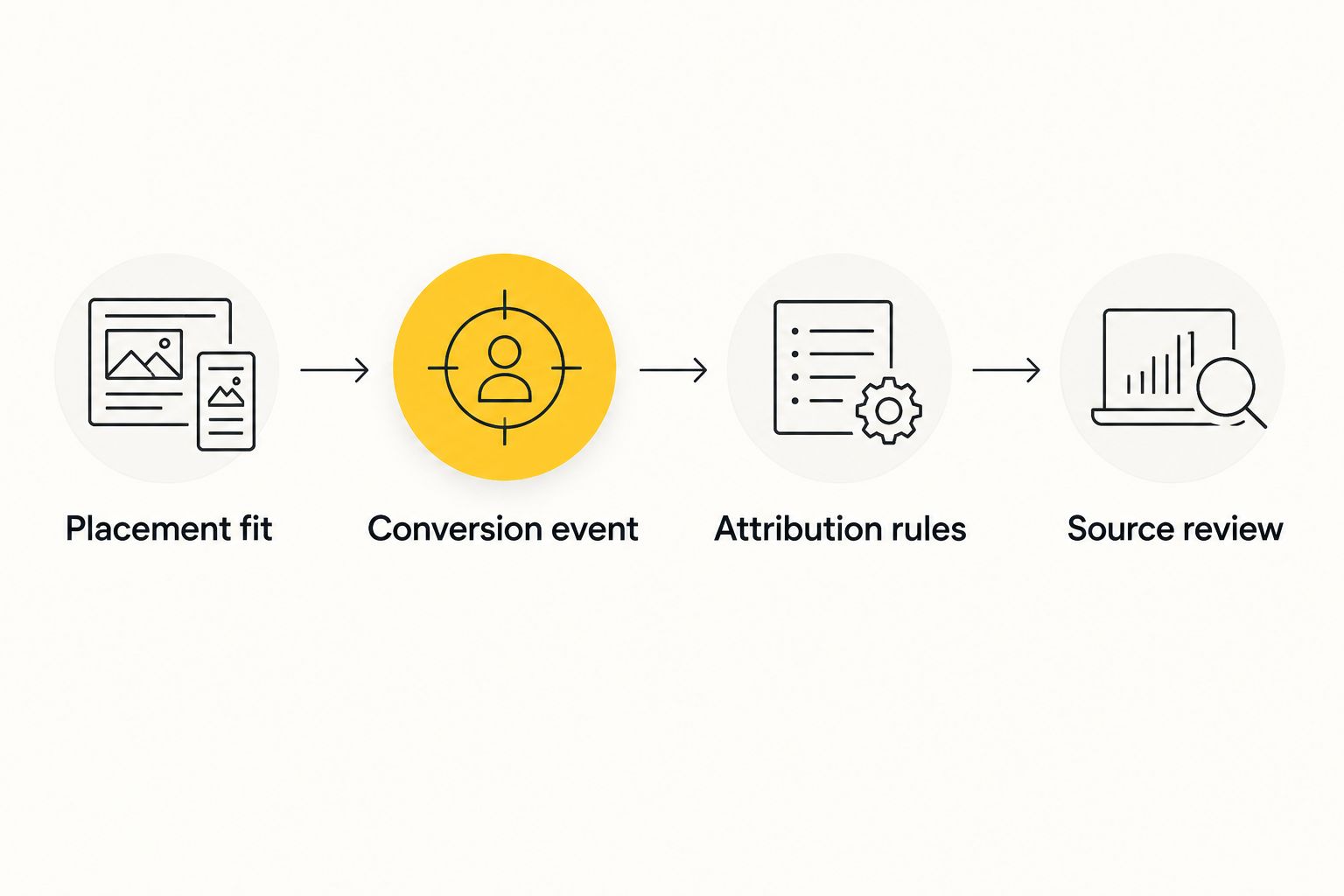
Use a measurement sequence that separates delivery from business outcomes. For a 2026 test, write down the rules before spend begins; changing the success metric after seeing results makes the comparison unreliable.
Placement fit
Record where the ad appears and what the viewer can do next. An in-player ad and an in-feed video create different viewing experiences, so judge the creative against its actual environment.
Conversion event
Define the event that matters: a purchase, qualified lead, approved registration, or another accepted action. For affiliate campaigns, distinguish a tracked conversion from an approved payable conversion.
Attribution rules
Document the click-through and view-through rules used by each reporting system. Keep platform-reported results separate from tracker-reported results when their definitions differ.
Source review
Inspect the placement and source information the buying platform provides. Review exclusions and investigate suspicious traffic patterns without treating a low engagement rate alone as proof of ad fraud.
Keep the buying metric separate from the success metric. CPM describes spend per 1,000 impressions; CPC describes spend per click; CPA describes spend per acquisition. None defines whether an acquisition meets your affiliate program's approval rules.
Optimize toward the accepted business outcome, not the easiest metric to improve. More completed views do not settle whether a campaign generates qualified customers.
How these options are ranked
This 2026 ranking is a use-case assessment, not a controlled performance test. The criteria are placement fit, offer eligibility, conversion measurement, buying control, creative workload, and traffic transparency.
The first recommendation addresses multi-format affiliate buying. YouTube is the default for a video-first campaign; Meta Ads and TikTok Ads serve distinct social creative requirements. No universal CPA winner is claimed because campaign results depend on the offer, audience, creative, and measurement setup.
Which video ad network should you choose?
Choose YouTube through Google Ads if you need a default starting point for a dedicated video campaign. Start with the campaign type and placement, then work backward to the creative and conversion setup.
Choose the multi-format option when your real decision is whether video deserves spend alongside push, popunder, display, or native. Choose Meta Ads for Facebook and Instagram placements, or TikTok Ads for purpose-built vertical creative.
Before committing to any option, answer these questions:
- Is the offer permitted in the target GEO?
- Does the creative fit the actual placement?
- Can you measure the conversion that determines success?
- Can you inspect enough reporting to make a defensible optimization decision?
If an answer is unresolved, fix that issue before expanding the campaign. A different network does not repair an undefined conversion event.
FAQ
What’s the best video ad network for advertisers in 2026?
YouTube through Google Ads is the default recommendation for a video-first campaign. Choose a different buying option when you specifically need multi-format affiliate traffic, Facebook and Instagram placements, or TikTok-style vertical video.
Is a video ad network the same as a social advertising platform?
No. A video ad network and a social advertising platform describe different buying models and inventory environments. Compare the actual placements and campaign controls rather than treating the labels as equivalent.
Which option is best for affiliate marketers testing several formats?
A self-serve multi-format network fits affiliate marketers comparing video with formats such as pop, push, display, and native. Keep each format’s results separate and use the same accepted conversion definition.
Should I optimize video campaigns for views or conversions?
Optimize for conversions when the campaign’s business goal is an acquisition. Use views and completion reporting to diagnose creative performance, not to replace the conversion outcome.
Can I use the same video on YouTube, Meta, and TikTok?
You can reuse a creative concept, but the finished asset needs to meet each placement’s requirements. Adapt framing, pacing, and the call to action rather than assuming an identical edit fits every environment.
Why do my ad platform and affiliate tracker report different results?
Different attribution rules and event definitions can produce different totals. Check click-through and view-through attribution, reporting settings, and whether the tracker counts the same conversion event.
What should I check before launching a video advertising campaign?
Check offer eligibility, placement fit, conversion measurement, and reporting access before launching. Confirm the destination works and that a recorded conversion represents the action you intend to buy.
One last thing
A completed video view is not a completed sales argument. Review what happens immediately after the click: the landing page should continue the promise made in the ad, and the conversion event should represent the action you actually value.
Before your next launch, write one sentence naming the audience, the video placement, and the accepted conversion. If that sentence is vague, the campaign brief is not ready.
Related guides